TikTok API Alternatives for Developers in 2026: get instant access
Getting access to TikTok’s API can take weeks, but there are alternatives available. Compare the TikTok API alternatives that give access instantly.
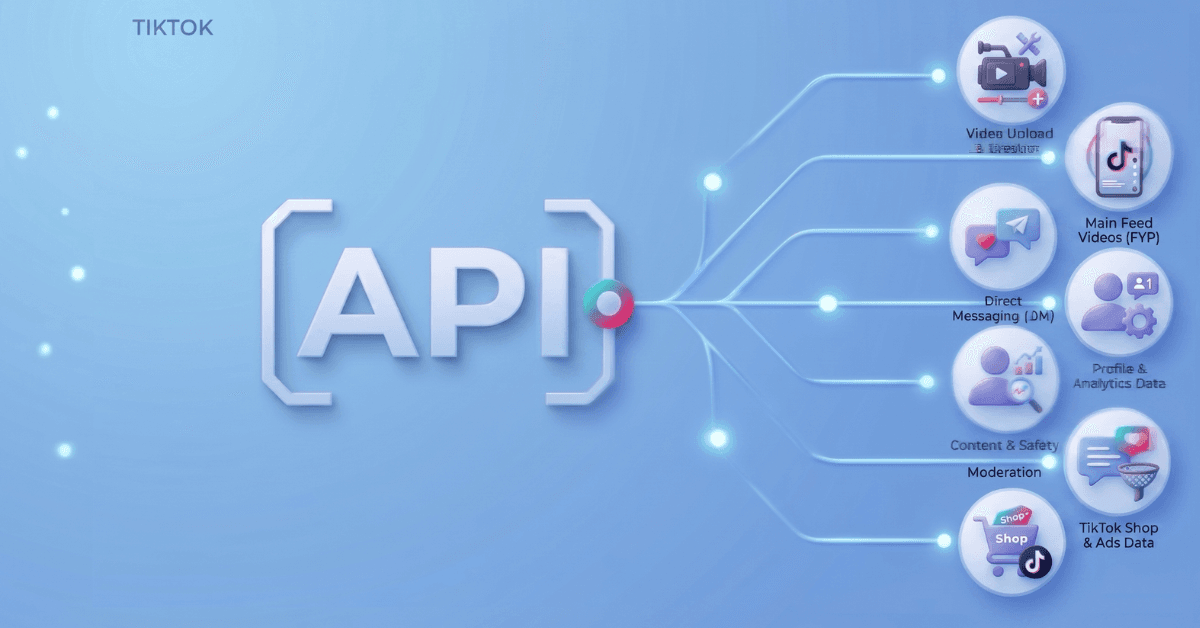
TikTok’s API is amazing to post your videos and other content directly to the platform without having to use a phone or going to the website. However, it is also notorious for having long review times before you can access it. TikTok API alternatives like WoopSocial are therefor getting more popular because of the instant access, but let’s look at the total landscape.
TikTok is very restrictive when it comes to giving access to their API. Along with that, the API documentation often changes and technical elements of the way the API works do as well. In most cases, you can expect a waiting time of 1-3 weeks, along with an equal development time depending on how fast you can code.
So before your app can even publish a single video, you’re already a few weeks in. Sure, the API will allow you to post videos as a test, but those are published as ‘SELF_ONLY’; private videos instead of public videos. Those are only able to be watched by yourself and will not be promoted by the TikTok algorithm.
TikTok API alternative: why do you even need one?
If integrating TikTok into your automations, workflows or platform is something that needs to be done sooner rather than later, getting a TikTok API alternative is very important. It’s simply the best way to skip a weeks-long waiting period. And that period starts after you’ve already built your own side of things.
See, TikTok’s API is only accessible if you can provide proof of what you’re going to use it for. Which means you cannot request access to the API until your own solution is already up-and-running; you need to provide videos and documentation about your own solution first before you can apply to have your application reviewed by TikTok’s internal teams.
But there are ways to skip this whole process. That’s where the TikTok API alternatives come in. Rather than going through the tedious process yourself, you can access an API that is already optimized for what you’re trying to do. Whether it’s posting content, getting data from the platform, researching, etc.
Which also helps to stop running into issues like rate limits, code changes from TikTok themselves, having to redevelop your own automations/workflows if new features or post types are added; it’s just a simpler solution to a hard problem that can create a lot of headache.
Some technical details about the TikTok API
The TikTok API has different functions, which is important to understand in order to find a good alternative for your specific use case. Each function has different rate limits, but also requires different permissions from TikTok’s team. That means that, if you have specific permissions for features right now, but want to expand that in the future, you would need to go through the entire permission process again for those new features (often taking weeks again).
TikTok Authentication API
Whether you want to allow users or yourself to sign into a platform using a TikTok account or you want to connect TikTok accounts to a platform to publish through it, you will need to use TikTok’s Login Kit. This is an OAuth 2.0 authentication process. You will get access immediately after registering as a developer - this is simply because you’ll need this for the additional API steps as well.
However, this authentication API by TikTok does not actually give you the permissions to start posting or gathering data from accounts. It will give you basic user information (user.info.basic), profile information (user.info.profile) and user stats (user.info.stats).
Note that the access tokens expire every 24 hours while the refresh tokens last 365 days. So you will need to implement token refresh logic into your own systems. The endpoint is https://open.tiktokapis.com/v2/oauth/token.
TikTok Display API
This is simply an endpoint to GET profile and video data from users on TikTok. And it only works if that user is connected to your TikTok App through the OAuth 2.0 authentication. Once the user approves, you can get access to data about their profile and the videos they posted.
This is ideal if you want to get information about the user’s videos metadata, their cover images, etc. However, it does not give you access to any engagement metrics. So this is simply - as the name states - to display. So if a user wants to display their latest TikTok content on their website, you can create an embed widget.
Do note that the rate limits are quite low here, with limits of 100 requests per day for the basic tiers. However, once you’re growing and have users, you are able to request higher rate limits with TikTok’s team.
TikTok Content Posting API
This is the publishing endpoint that most users want. It’s the only way to programmatically upload videos and other types of content to the platform. This is a really popular use case for the TikTok API, but because of its popularity it can take a while to get access to it. The more people request permissions to build apps with this API, the longer the wait time, and currently the wait times are very long (which is also why unified social media API solutions like WoopSocial exist and are being used so much).
This API offers two different flows: direct posting (which uses the ‘video.publish’ scope) and upload to inbox (using the ‘video.upload’ scope). Note that only the first one actually requires a passed audit, and any video published until the audit is passed will get the status ‘SELF_ONLY’; this is a special status for videos during the audit process.
Note that a maximum of 5 user accounts can be authorized through your development app per 24 hours and that all those accounts need to be set to private.
Getting full access to the TikTok Content Posting API requires a full manual review by TikTok, which includes heavy guidelines and requirements. This includes your fully built integration that must render a “Post to TikTok” page that displays your or your users’ privacy levels, Duet/Stitch settings and additional content disclosure options. You can also not just create the app to use as a test or as an internal tool; all audited apps are required to be public tools for a wide audience.
Because of this long list of requirements that are needed before you even start the audit, you are looking at 2-3 weeks of development time - that’s the bare minimum for most apps. After that, expect a timeline of 2-6 weeks per review, where your app can possibly go through multiple review rounds if things are missing or are unclear to the TikTok team.
The Content Posting API allows you to post videos, images and carousels. It also allows you to add captions. Note that for video specs, it only allows .mp4, .mov, .webm and .avi. There’s a size limit of 1GB and videos need to be 3 seconds long at minimum. Carousels use .webp and .jpeg (so no .png).
The limits are 15 posts per account per day (user accounts, not the app itself). Higher rate limits can be requested later on but it’s advised to not post more than 15 times a day to a TikTok account anyway as the hybrid (also manually posting) is estimated to be 25.
Alternative for the Content Posting API
We will dive deeper into this later as well, but just a quick note of what a TikTok API alternative helps you do to ensure you get instant access instead of having to wait.
| Feature | TikTok Content Posting API | WoopSocial |
|---|---|---|
| Setup time | 2-3 weeks development + 1-3 weeks review | ~60 seconds with API key |
| Audit required | Yes, full manual review before public posts | No, audit already passed |
| Test posts | SELF_ONLY (private) until audit passes | Public posting immediately |
| Token refresh | Must implement (24-hour access token expiry) | Handled by the platform |
| Webhooks | Yes, can also poll for status | Yes, webhooks included |
| Upload method | TikTok pulls from your server (PULL_FROM_URL) | Push content to REST endpoint |
| Rate limits | 15 posts per account per day | Unlimited posting on free and paid plans |
| Pricing | Free API, but high development and wait cost | Free: 2 accounts; $19/mo for 20 accounts |
| Multi-platform | TikTok only | TikTok plus 6 other major platforms |
| MCP / AI agent support | Build and maintain yourself | Yes, MCP included |
| Best for | Public apps with weeks to spare | Instant posting, automations and AI workflows |
TikTok Research API
If you’re a researcher who is looking to gather tons of data about TikTok’s public content database, such as trends within videos, users, comments, hashtags being used and other data, then the academic-only data access API by TikTok is a good fit.
Instead of having to scrape all this data with external tools, you can apply to get access to the TikTok Research API. Note that this is really only for universities and other educational departments; it requires IRB approval and academic credentials. And you are not allowed to use it for any commercial activity.
TikTok Share Kit
This is just a small tool that allows you to add a “Share to TikTok” button in third-party apps which contain pre-filled captions and hashtags. Note that this is not the same as the Content Posting API.
Data Portability API
This is a GDPR-compliant tool to export user data between TikTok and third-party apps.
Commercial Content API
This API is used for advertiser and campaign workflows. This requires an activate ad account but is completely separated from posting content to TikTok through the Content Posting API.
Marketing API (For businesses)
This API allows you to manage your campaigns on TikTok through a single API. You can use it to create, manage and optimize your paid ads on the platform.
Using this, you can create third party software (like an ad management/optimization platform) where users can connect their TikTok Ads Manager accounts. Or you can use the API to optimize your own ads on TikTok.
Note that this only runs with ads, which means that the Marketing API does not allow you to publish content. Although the naming conventions here can be confusing, publishing content can only be done by the Content Posting API and not the Marketing API.
Why most people need a TikTok API alternative
Now that we have a full list of all the TIkTok APIs, it’s clear that there are a lot of different ways that you can connect to the platform using endpoints.
However, not all of them are extremely useful for everyone. Seeing as most people want to simply post to TikTok to automate workflows or create their own platform for users, it can get confusing quickly. You might get wrapped into a lot of different permissions, infrastructure and other issues by the time you know fully well what is actually necessary.
And the long waiting time isn’t of much help either. Which is why using a TikTok API alternative is much more useful in this case.
The auditing/review process simply has a big bottleneck: firs you need to have a complete, production-ready integration ready before you can even test it with a wider audience. And if your integration gets rejected, you need to go through the reviewing process again by resubmitting. Sometimes Apps don’t even pass at all. So instead, people would like access to the TikTok API without an audit.
Publishing is also async
Where other social media platforms allow you to push your content to their endpoints, TikTok actually accesses your server. Which means that your server needs to be publicly accessible through a URL, otherwise they cannot reach it.
Because the TikTok API has webhooks, you can get the status that way, but you can also poll. Bigger videos might take minutes to process due to their size. Because .png images are rejected, this comes with all types of errors. So the publishing sequence here is asynchronous, which makes it harder to develop everything right the first time.
This is where alternatives for the TikTok API come in; they do offer you to push content instead of pulling it. And they also offer webhooks rather than polling. And because they have optimized workflows for video processing, it’s much easier to get your videos uploaded to TikTok.
TikTok API tokens expire after 24 hours
The access tokens that TikTok creates expire automatically after 24 hours (although the refresh tokens will last 365 days). This means that you need to implement refresh logic for both types of tokens. This is a significant difference though. The OAuth 2.0 tokens for the Instagram API last 2 hours and the refresh tokens only last 60 days.
The unfortunate side of TikTok API rate limits
The first and foremost rate limit that we covered earlier: there’s a limit of 25 posts per creator account per day (6 per minute) using Direct Post in the Content Posting API.
However, the rate limits for your app are negotiated completely separately and rely on the total use of your app. If you are growing quickly, this often means you need to get more usage, which needs to be negotiated with the TikTok team. This might not be relevant for everyone, especially if you’re doing smaller numbers, but it’s important to keep an eye on.
The alternative options for the TikTok API
Now that you have a clear picture of what is actually going on with the TikTok API and why people are looking for alternatives, it’s time to look at what options you have to completely replace it.
Note that there are two scenarios where you might want to replace it: you currently have no TikTok App at all and want to get access as quickly as possible. Or you do already have a TikTok App but are hitting rate limits and cannot get an increase.
Using a unified social media API as an alternative
This is the most popular choice for developers or vibe coders when it comes to a pure alternative for the TikTok API. Instead of having to rely on long review rounds, you get instant access when you are using a unified social media API: a single endpoint that allows you to post to TikTok and to other social media networks as well.
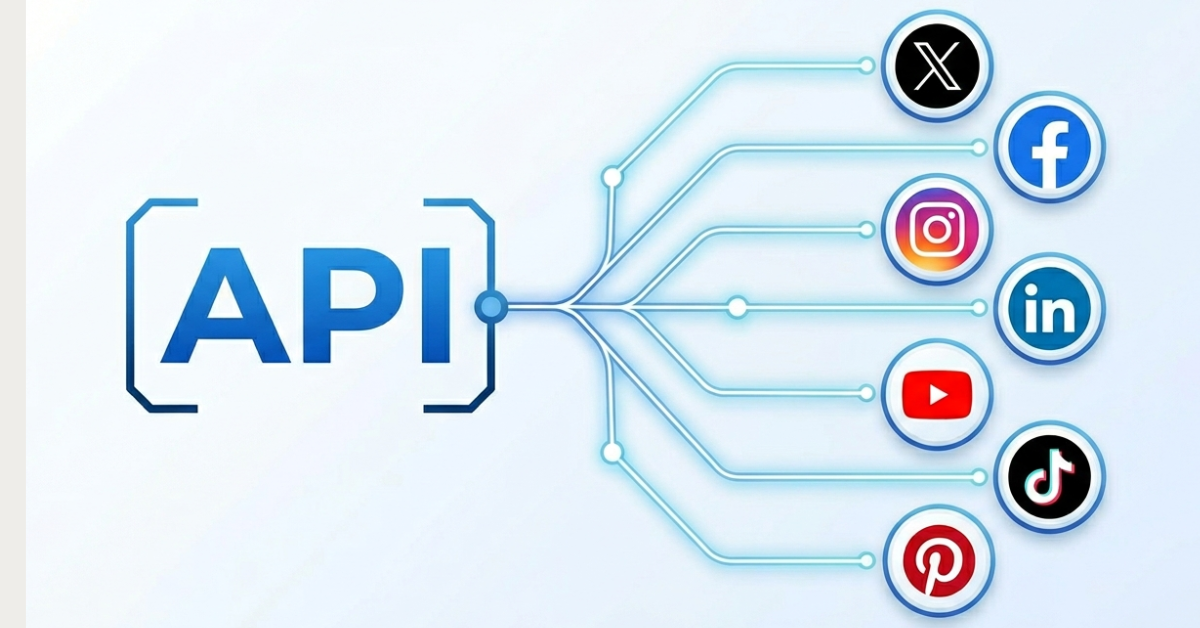
It’s a middleware service that just wraps the Content Posting API into a much simpler REST endpoint. The tools behind the unified social media API have already passed the audit that TIkTok’s team needs to do, so the waiting period can entirely be skipped. Plus you can already get access while you’re still building your workflows or platform.
A unified social media API also covers the entire process of authentication, token refreshing and file uploads. These processes are quite hard to put together as a developer, and in reality they just take up a huge chunk of your time. And once TikTok updates their API, you need to go in and fix it. But the unified social media API will just keep running while you don’t have to make changes.
It does mean that you need to start paying to post to TikTok, but it’s still a lot cheaper and faster than developing everything yourself. For example, WoopSocial offers 2 accounts for free with unlimited posting, or $19/m for 20 accounts with unlimited posting.
Another big benefit of unified social media APIs is that you can run them using AI agents or through an MCP. This makes it much easier to create workflows and automations that brainstorm about content, create that content and then distribute it to not just TikTok but also other platforms.
Or pick a social media management platform
Another way to bypass TikTok’s extensive review process is simply by using a social media management platform. This is an ideal TikTok API alternative for non-developers who just want to schedule posts quickly. And luckily, social media management platforms often have a unified social media API attached to it.
The difference with a social media management platform is that everything related to development is already done. Authentication, token refreshing, etc. is already included. But it also includes features like a visual calendar, which makes it much easier to get an overview of what is happening on your social media profiles.
Social media management platforms have been popular for a very long time and in reality are probably the best option for most people, especially if you do not have a background in developing.
Just like the unified social media API, this alternative does come with a price tag. But it’s often quite overseeable in the scheme of things. Most platforms offer unlimited posting and you pay per number of accounts.
If you’re a social media manager, agency or a marketing team that thinks it might need TikTok API access, odds are you might also just be able to do those things with a regular social media management platform.
So what’s the best TikTok API alternative?
Now that we discussed the two types of options, it’s time to actually look at the specific options that you can pick when it comes to alternatives to the TikTok API.
WoopSocial - unified API and platform
WoopSocial has a reputation of being the ideal alternative for TikTok when it comes to posting and scheduling. You can skip the entire review process and start posting immediately with all of your accounts. Its free plan offers 2 social media accounts with unlimited posting.
As mentioned earlier in the article, a unified social media API is super helpful when it comes to bypassing the TikTok API review process. So it’s smart to use one like WoopSocial to bypass it quickly. Rather than waiting for 1-3 weeks, you get access instantly and can start posting within 60 seconds. So much simpler, plus it comes with MCP integrations as well.
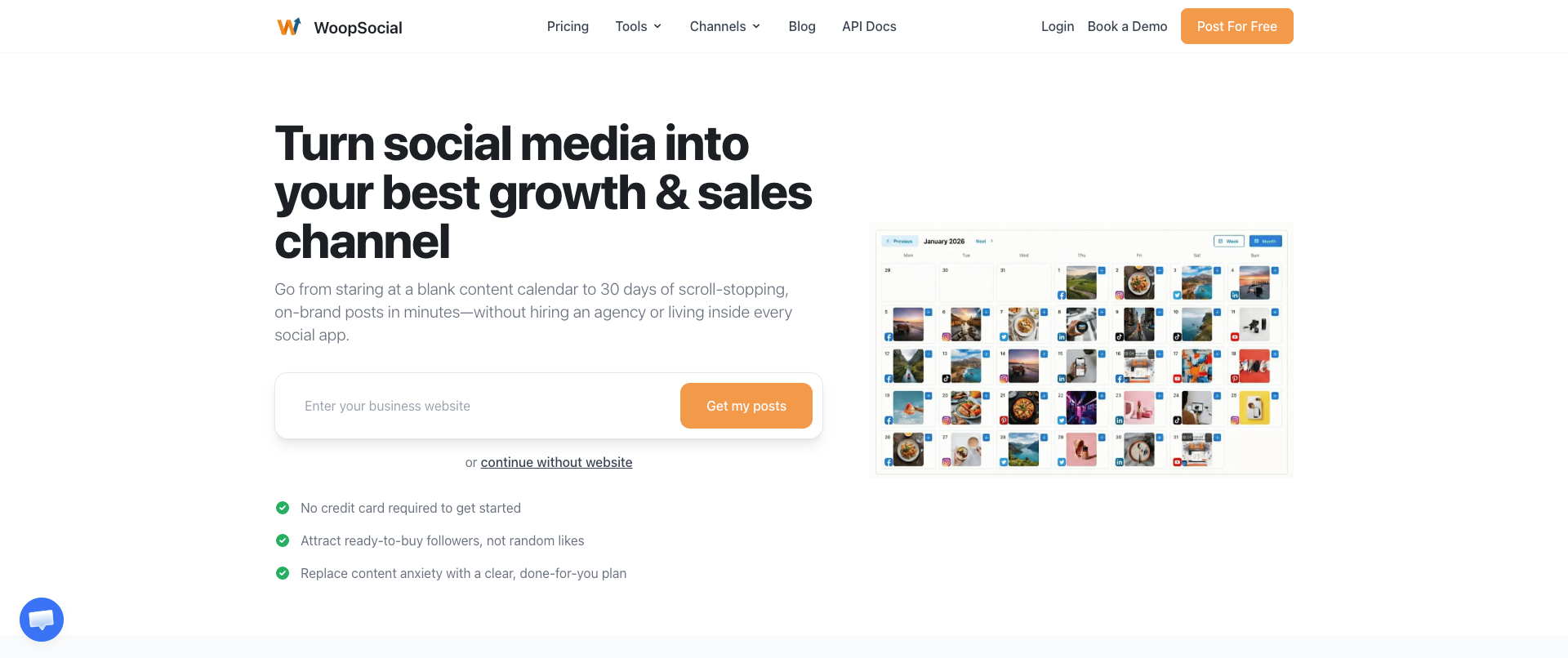
And because it’s a hybrid solution (both an API and a platform), it also fits users who do not want to develop anything with a REST API. The platform can be used to create new posts independently without needing any experience with APIs or knowing how they work.
So whether you’re a developer that is looking to create AI agent workflows or wants to integrate TikTok posting into their platform, or you’re not someone who knows how to develop but still want to post to TikTok and other social media platforms then WoopSocial is an ideal choice.
Because it has the most lucrative free plan out of all TikTok API alternatives, it’s also the best to start testing right away. You can add 2 accounts for free with unlimited posting. If you want to add more accounts, you only pay $19/month for a total of 20 accounts and you can stack that over and over again (so $38/mo for 40 accounts)
Buffer’s platform and API
Buffer also offers a similar hybrid approach and makes it a good TikTok API alternative, although it does come with a smaller free plan and pricing also goes up quite quickly.
Using the platform, you can schedule your posts natively with just a few clicks. It also offers analytics and additional team features such as content approval workflows. Although that feature does move up the price per social media account from $5/month to $10/month.
Buffer also has its own social media API, which you can use as an alternative for the TikTok API. Quite useful if you want to use an MCP or AI agent. However, the API was recently relaunched. Both the $5/account/month and $10 plan cover API/MCP access. The free plan offers 10 posts per month. Paid plans offer unlimited posting per account.
Apify - Scrape TikTok data without their API
You can scrape a ton of data from Tiktok if you have the Research API, but this is limited to researchers. If you still want to get data from TikTok, Apify can help you get the necessary data. Using “Actors”, which are automations on the Apify platform, you can upload lists of hashtags, keywords or user profiles to get their data.
Because Apify works with proxies, it’s easy to go through long lists that you provide yourself. You can also link different Actors, one for scraping specific hashtags to get users, then turn that user lists as seeds for other automations to get bio data, followers or videos. Those video lists can then again be used to get engagement metrics such as views, likes, saves and more.
Because Apify offers easy API endpoints, building workflows and automations is incredibly easy. And with their MCP features, you can run everything from within your favorite AI Agent such as OpenClaw or Hermes, or work with it directly in Claude or ChatGPT. Apify is available through a monthly subscription, but they have a good free tier as well. Some Actors charge per request or are also charged monthly.
SociaVault - get all public TikTok data
Just like Apify, SociaVault helps you get data from TikTok. It’s a great TikTok API for the Research API. SociaVault focuses on public data specifically. So any data related to public pages can be scraped through their API.
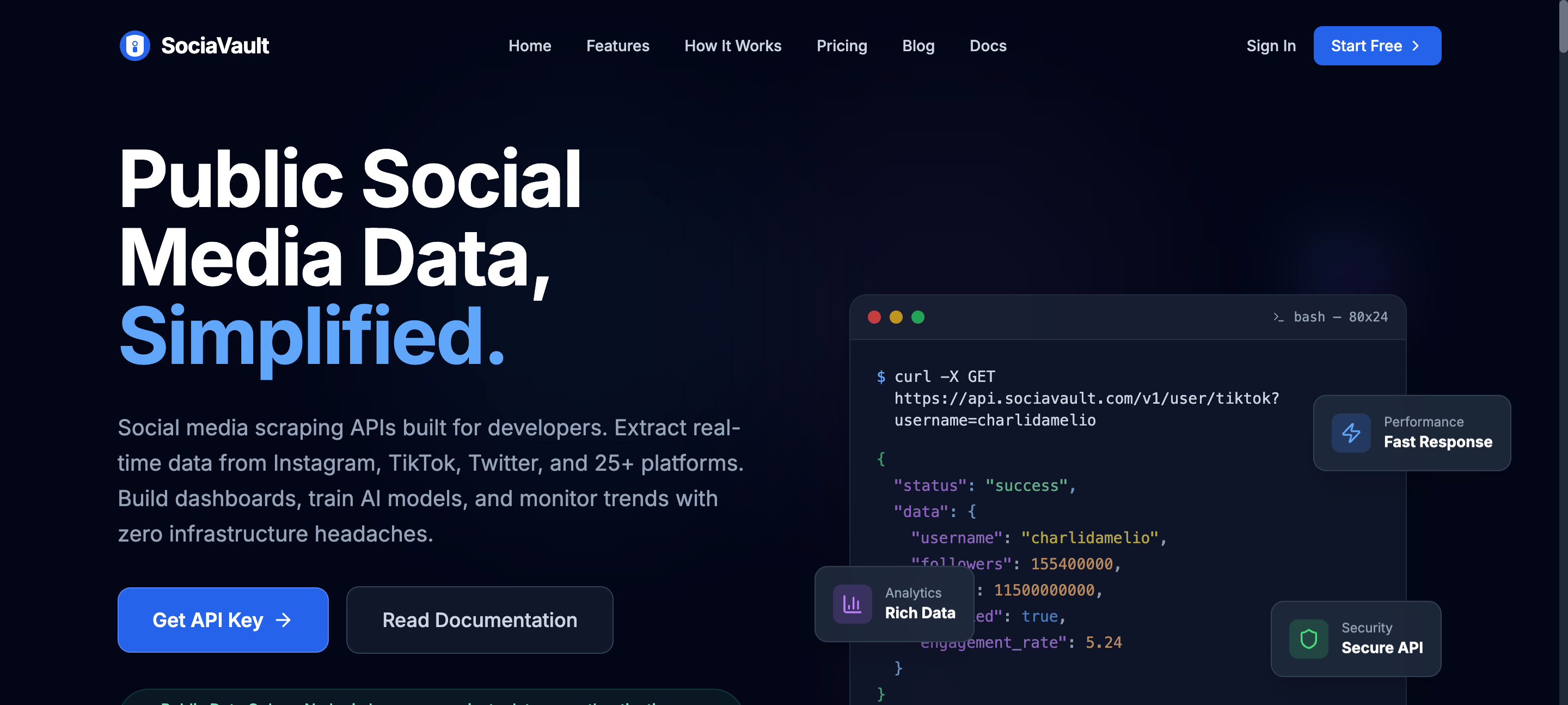
SociaVault is a pay-per-request platform. This means they do not have subscriptions. You can get proxies to scrape, which means you can rotate IP addresses to get as much data as possible. Because it also solves CAPTCHAs, it’s a good solution to automate all types of data scraping from TikTok without having access to the official API.
| Feature | WoopSocial | Buffer | Apify | SociaVault |
|---|---|---|---|---|
| Primary use | Publishing and scheduling to TikTok | Platform scheduling plus API/MCP | TikTok data scraping via Actors | Public TikTok data retrieval |
| Setup time | ~60 seconds with API key | Few clicks to connect accounts | Fast via plug-and-play Actors | Fast via REST API |
| Free tier | 2 accounts, unlimited posts | 10 posts per month | Good free tier on marketplace | Pay-per-request only |
| Pricing | $19/mo for 20 accounts (stackable) | $5/account/mo basic, $10/mo Pro | Monthly subscription plus per-Actor costs | Pay-per-request |
| Post to TikTok | Yes: videos, images, carousels | Yes, with scheduling | No | No |
| Scrape TikTok data | No | No | Yes, extensive via Actors | Yes, public data focus |
| MCP / AI agent support | Yes | Yes (recently relaunched API) | Yes | Via REST API |
| Dashboard included | Yes, visual calendar | Yes, with analytics | No | No |
| Best for | Developers and non-devs, AI workflows | Teams with approval workflows | Influencer outreach and bulk data | Pay-as-you-go public data access |
How to choose the best TikTok API alternative
Now that you know all the ins and outs of the API, how it works, what the rate limits are and which use cases it covers, it’s time to look at which TikTok APi alternatives are the right fit for your specific use case.
Building an AI agent that publishes content to TikTok
Because AI agents work directly with MCPs (or can also work with APIs), publishing APIs lik the WoopSocial - which was mentioned earlier - is a great fit. It connects directly with any AI agent and thanks to all the tools that the MCP has, it can very easily create full content calendars, which you can feed to video generation models, which can then directly be scheduled to the WoopSocial platform with your favorite AI agent.
Scraping TikTok data for influencer outreach
If you want to get lots of data about influencers in a specific niche, tools like Apify and SociaVault are the best option. Because you can feed them hashtags or keywords, it’s very easy to get long lists of users. Throw those lists of users into further automations to get engagement metrics so you can calculate expected view counts and likes if you collaborate with the influencers.
I want to manage lots of TikTok accounts in one platform
In that case, WoopSocial and Buffer are fantastic choices. You get a simple dashboard where you can run all of these TikTok accounts to directly publish posts or schedule them for the future. Note that direct scheduling is the only option with the official API, so this is also a good TikTok API if you want to schedule videos, images or carousels to go out in the future.
How to migrate away from the TikTok API
If you already have access to the TikTok API but you keep running into rate limits or are just tired of having to update your own code constantly because of new changes, then migrating away from it is a great choice. This also opens up possibilities to integrate more social media channels into your strategy, as switching to a unified social media API offers access to Instagram, Facebook, LinkedIn, X, YouTube and Pinterest as well.
How much do you really publish?
Before migrating, it’s important to keep track of how much you actually publish. If you are constantly hitting rate limits, migrating will be much faster than requesting new rate limits from TIkTok’s internal team. Create an overview of how much you post.
Map all the API endpoints you are using
If you are also using other API endpoints that TikTok’s API offers then it’s good to map those out. You can then directly map those. Publishing? Link to WoopSocial or Buffer. Using Authentication? Again link to WoopSocial or Buffer. Gathering Data? Link to Apify or SociaVault.
Now run a parallel for a few days
Just to be sure: run a parallel if you are specifically focusing on data scraping. This is just to ensure that you are getting all the data that you are already getting before the migration. If you are actively publishing through the TIkTok Content Posting API, split half of the posts through your own setup while pushing the other half to the unified social media API.
Now it’s time to fully migrate
Once you are certain that everything works as it should, it’s time to fully migrate to the new set up. Double check all endpoints and simply toggle the switch to start fully using the new API endpoints. This is the best way to migrate to a good TikTok API alternative.
The TikTok API is simply not for everyone
Because of the long waiting times, the need to have a production-ready platform ready, and the rate limits, getting access to the official TikTok API is simply not for everyone. It is often much quicker to use an alternative for the TikTok API that speeds things up significantly.
Because once you start using it, you don’t need to worry about any of that. Even when TikTok decides that the API gets significant changes, platforms have dedicated developers or teams that ship these new required changes as soon as possible - this is the same for new features in the TikTok API. Instead of having to wait for days or weeks again, everything is immediately available.
Sources & References
- TikTok for Developers
OFFICIAL
- Content Posting API
OFFICIAL
- TikTok for Developers Changelog
OFFICIAL
- WoopSocial API Documentation
OFFICIAL
- WoopSocial MCP Overview
OFFICIAL
Related reads
6/12/2026
Best Facebook API Alternatives for Developers in 2026 for direct access
The Facebook Graph API review can take weeks. Compare the best Facebook alternatives for posting, scheduling and more.
6/9/2026
Instagram API Alternative for Developers: get instant access in 2026
See what alternatives for the Instagram API are best when you want to schedule, get analytics or publish, so you can set it up without the complexity
5/2/2026
The 18 Best Social Media APIs (REST) for Developers in 2026
Social media APIs are part of the core infrastructure for modern apps. Whether you're using it as regular scheduling tools or integrating it with your AI agent, you need the right social media API to post to all your required platforms.