Social Media Playbook for Home Remodeling Contractors
This social media playbook guides remodeling contractors on attracting qualified leads, pre-selling their process, and converting followers to clients.
Home Remodeling Social Media: A Playbook for Remodeling Contractors
Home remodeling social media is a whole different ball game than contractor marketing. You are asking a customer to let you into their home, spend thousands or tens of thousands of dollars, and live with the noise, mess, and decisions and surprises for weeks or months. That means that your social media has to carry more credibility than a nice before-and-after. It has to inspire confidence. And since many buyers take time to decide, it has to keep delivering during a long sales cycle, not just get a like on a single day.
Then there’s the part you never admit out loud: You don’t want a gazillion leads. You want the right leads. You want leads in your area, in specific areas. You want leads with the right budget. You want leads who “get it.” If you only have so much bandwidth on your team, wrong leads are a nuisance, but they can also drag you backwards by consuming hours of your personal time in the evening and on the weekend. You don’t want a million leads. You want to moderate demand. You want to filter for the best leads. You want to line up profitable work.
Inside this social media playbook for remodeling contractors, I’m going to walk you through the exact steps I take to drive local demand through social media, pre-sell your process before you even talk to someone on the phone, and convert your social media audience from “likes” to booked consultations. You’ll learn how to decide what to post, how to communicate your services, and how to make your content be the answer to what your prospects are searching for so the leads that come your way are more qualified, more confident, and more likely to hire you. If you want a bigger framework around this, see social media automation.
A social media strategy for a home remodeling company is no different.
Build a system for conversion (not a system for posting)
You need to create a system for conversion, not a system for posting. Don’t use social media like a content hamster wheel. Use it like a sales funnel.
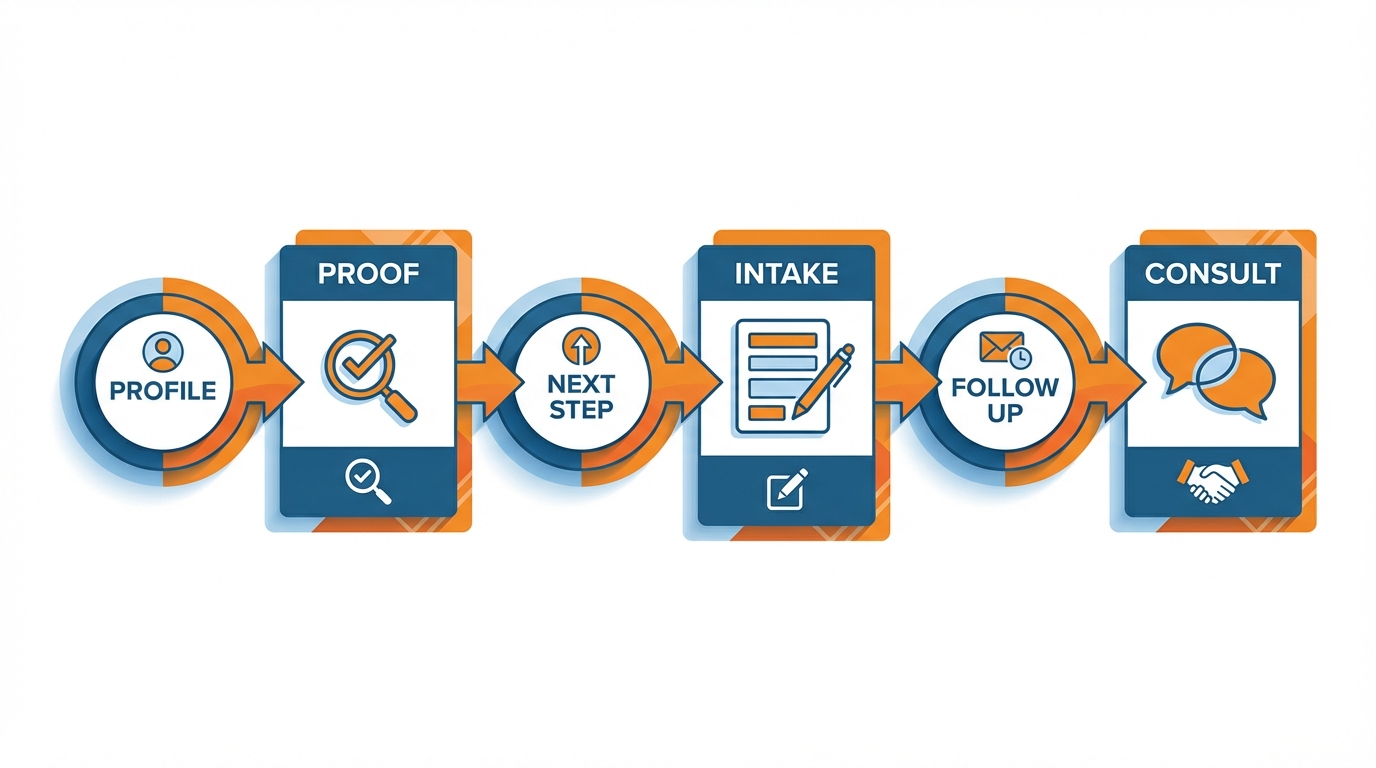
This funnel is one of my signatures and I use it because it’s just so dang simple: profile -> proof -> next step -> intake -> follow up -> consult.
Many of you are jumbling all these pieces up and then pointing homeowners in 5 different directions at once so all you get is likes and a few DMs and a whole lot of “maybes” that never get turned into an actual scope.
Instead, I want you to make the buyer journey really obvious: A homeowner sees you. They immediately know whether you serve their area and their scope of work. They trust you because you actually show proof and process. And they take one clear step to move into your pipeline.
Your profile is your highest-leverage conversion page on social, so start there.
It should include:
- your service area in the first line
- a concise specialty description that weeds out the wrong work
- proof that can’t be faked
- a single next step
Service area clarity can help quickly improve the quality of inquiries because homeowners pre-screen themselves before even messaging you, particularly in cities where commutes and permits are determined by neighborhood.
Proof shouldn’t be limited to beautiful after photos.
Show the messy middle: jobsite protection, permit board, punch-list walk-through, material deliveries, and the order in which you do things.
Finally, eliminate decision fatigue by selecting a single next step and making it the only clear course of action because too many links and mixed messages can quietly sabotage conversion. The CTA needs to match the certainty level of the prospect, not where you would like them to be.
If you want more qualified leads and less price shoppers, you want to lead with a design consultation because it appeals to homeowners who are willing to spend money and positions you as a service provider rather than a contractor.
If you need more leads or are targeting a less experienced homeowner, a consultation call is a better option because it’s lower risk and you can still dictate the terms of the call.
If you’re getting a lot of inquiries but not a lot of committed clients, a ballpark estimate is a good screening device because it maintains the level of interest in your service while saving you time in the evenings and on the weekend, since it makes the “how much does it cost?” question a typical screening question.
If you’re busy, a “get on my waitlist” CTA can actually build value while keeping interested homeowners in the wings as long as you’ve defined on your profile and in your posts what it takes to “get on the waitlist” and what they can expect if they do.
You can guard against social media leads taking up too much of your time, but you have to do it the right way, which means you communicate, don’t dictate.
You communicate budget ranges and minimum lead times as context, not caveats.
You define what you don’t offer so bad fits naturally filter themselves out.
You send cues on when you’ll actually start and stop working each year so interested clients get off the fence.
You cure the social lead ‘flake’ disease by responding quickly, yes, but respond specifically with a single clear step and reference to the context in their message.
My personal experience is when you make the next step clear and simple, the number of replies you get goes way up, because homeowners are not responding to you, they’re responding to process.
Partnerships & local cues (the easiest way to conquer social media)
Home remodeling contractors: the easiest way to conquer social media is to focus on partnerships & local cues. What really gets social media to go for your home remodeling company isn’t about stretching your “reach” as far as you can. It’s about really owning your service area.
Renovation is a driveway-and-dust industry, so the algorithm has to know your location, not just your niche. You can reinforce that signal right away: Just make sure your service area is the same in your bio text, your on-screen video text, your captions, your comments, and include the neighborhood or region you want more projects in on each project post. If you need help getting consistent, see inconsistent social media posting.
I keep my account local by stacking location signals across the month, not the day, since repeating neighborhood names works like behavioral data for the algorithm.
When a homeowner in your area types “kitchen remodel” into search, or sees a friend like your post, I want your company to look like the default local option, not some random company with great photos.
The only scale factor that matters is other people’s trust, because that’s how local trust spreads.
Create a network effect with realtors, designers, tile vendors, cabinet shops, architects and vendors by sharing content that they want to share, and share their content in a way that adds meaning rather than mess.
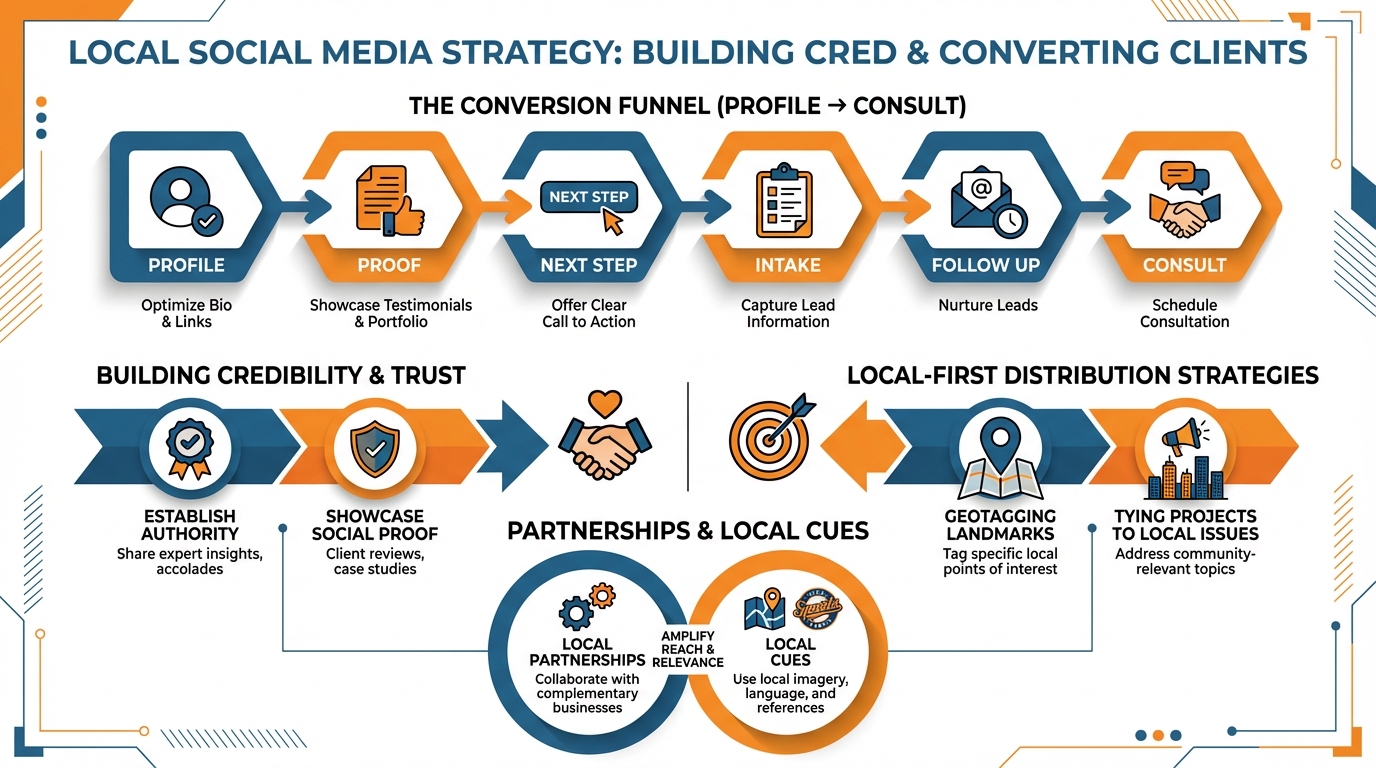
When you tag the cabinet shop in the project reveal, they tag you in the cabinet install detail, the designer tags you in the mood board, and the project goes from a one to a four channel distribution strategy targeting the same homeowners.
I structure collaborations so that content flows in both directions: you share the full project, your partner shares their specialty slice, and you drive traffic back and forth to each other with hyperlocal context.
That’s why collaboration is more powerful than generic hashtags.
You are renting other people’s trust, not just buying generic eyeballs.
Now we look for the creators.
We call these micro-influencers and local influencers, but don’t look for how many followers they have as much as how well do they fit our criteria.
The first thing we want is location.
An account with 5,000 followers but 60 to 80 percent of them are local is better than a 50,000-follower account all over the country.
The second thing we look for is if they’re homeowners.
Creators that talk about moving, renovation, raising a family, DIY buyer paralysis, or local real estate are all going to do better than a pure lifestyle account.
Lastly, we need to look at credibility: Are there real comments? Is there local banter going on? Does the account sound like the guy next door explaining something or does it sound like an advertisement?
At the bottom, I keep a list of local partners with tabs like this: niche, neighborhood, budget their clients have, date of last communication, and one post idea that I can pitch to them.
That way, my outreach process is something I systematically run every week and not just a DM that I send when I happen to think about it.
The local-first distribution strategy (micro-strategies)
The local-first distribution strategy involves a series of micro-strategies.
One, make sure to geotag any project you post, but instead of the address of the project itself, use a local landmark or its surroundings.
Two, tell a story that ties your project to a local issue. “I did a basement conversion in this home on that street because the old water heater kept bursting. It’s a common issue with these old homes. Now that the basement is finished, it’s storage for the new tankless water heater and the washer and dryer.” For instance.
Three, use social media like a dinner party. You get your attention by responding to questions, showing process, etc. Then you share a project when it’s relevant to the group.
I find Nextdoor is effective if you post as a local pro, and the project you share is within that neighborhood’s boundary.
I find Houzz is worth it if you have a strong portfolio and consistent project photography, because homeowners use it like a visual shortlist. This matters even more when you consider that the Houzz & Home Study press release reported a study size of 30,000+ U.S. respondents and a median renovation spend increase of 60% from $15,000 (2020) to $24,000 (2023).
And lastly, you want to connect your social media marketing to your Google Business Profile. If you want a tighter system, see google business profile automation.
First, share your strongest project photos on GBP.
Second, drive review velocity by asking customers to include the neighborhood and project type in their review.
Third, seed questions that you want prospects to be asking before they call you. “What’s the typical project timeline?” “How do you handle dust?” “What’s the typical budget range for a project like this in this zip code?”
By doing that, you connect social media to GBP and to leads, and it stops being content for content’s sake.
Pre-sell the process (not just the reveal)
As a home remodeling business, you’re not likely to make a sale on social media, but you can use social media to “pre-sell” a customer on the remodeling process, getting them one step closer to deciding to start a remodel.
Social media is most powerful for contractors when you stop using it to show the end result and start using it to pre-sell the process.
Before and after is still important, but it’s the process proof, decision help and expectation-setting content that actually gets you quality leads.
You want people to know how you operate and what you expect from a project before they contact you because people don’t buy remodeling services, they buy risk mitigation.
By regularly showing site protection, cleaning up, inspecting work, and why you selected this over that, you teach the good leads to think like a client, and you weed out the bad leads.
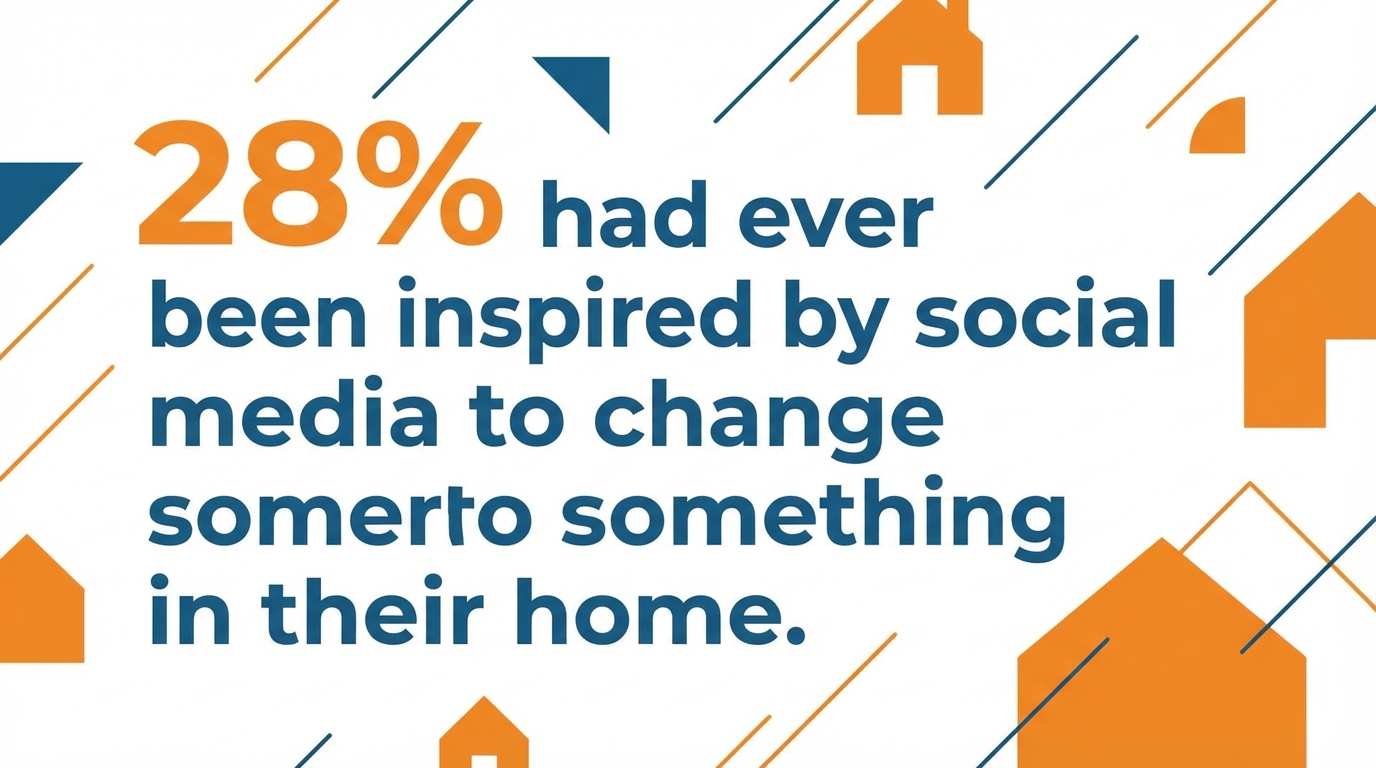
This is the way you shift people from comparing your price to comparing your certainty. It also matches how audiences actually use platforms: in a 2022 survey of 6,600+ European consumers, social media inspiring home improvement reported 28% had ever been inspired by social media to change something in their home.
Want fewer bad leads and higher conversion? Then you need to create objection-handling content intentionally-not just as a reaction when someone whines.
Craft posts around the issues that make good clients feel better and tire kickers retreat: timelines, permitting, dust, living in a home, frequency of communication, warranties and change orders.
One useful guideline to use is that permitting alone in many jurisdictions can take weeks-not days-and the vast majority of blowups are due to late selections or scope changes-not a lazy crew.
When you communicate those drivers clearly, you’ll have less back-and-forth, less drama and fewer prospects who will never be satisfied.
This doesn’t require great video quality, and it absolutely doesn’t require fake days.
If you turn one day on a jobsite into a story arc from demo to punch list by gathering proof of each little piece of it-the dusty part, the protection you used, the surprise you uncovered, the choice you made, the inspection you passed, and the tweak that corrected it-you can film five to ten five-second videos and narrate what you did and why, because homeowners value the thought more than the film-making.
And you should aim for a simple balance: for every reveal post you make to get attention, you should make three to five process and guidance posts that make the reveal seem both expected and authentic.
Match content to the buyer’s risk perception
Content should match the buyer’s risk perception, depending on your business model.
- A design-build company should focus on decision support and scope management, because the homeowner is worried about too many choices and scope creep.
- A general contractor working with subs should focus on communication, sequencing, and gap prevention, because the homeowner is worried about managing the project.
- A specialty trade should focus on tolerances, preparation, and warranty, because the homeowner is worried about quality.
- A high-end remodeling company should focus on documenting constraints and tradeoffs, because the homeowner is buying expertise.
- A volume remodeler should focus on predictability and process, because the homeowner is buying convenience and a low-stress experience.
A universally appreciated credibility signal is a decision made under constraints.
What you wanted to do, what the house would allow, what the budget would allow, and what you decided and why.
That’s how a homeowner figures out who to trust with their house.
What drives sales in home renovation? (Track what matters)
What drives sales in home renovation?
Social media platforms like Facebook, Instagram and Houzz can be valuable marketing tools, but can be hard to measure in terms of sales.
Here are some ways to track which social media posts are translating to dollars in your home renovation business, and how to double down on those strategies:
Social media is actually totally consistent if you view it through the lens of a sales funnel, instead of through the lens of how many likes you get on a post.
So, the metrics you are looking at, are how many people are looking at your stuff, how many of them are clicking through, how many of them are filling out a lead form, how many of them are scheduling a consultation, how many of them are getting an estimate, how many of them are closing, and what are the values of the jobs. If you want to avoid getting misled by surface-level numbers, see vanity metrics.
Because each one of those tells you something different.
How many people are seeing your post tells you about how well you’re being distributed in the local market.
How many people are clicking through tells you whether or not your messaging is good, and whether or not your offer is good.
How many people are filling out a lead form tells you whether or not your process is easy.
How many people are scheduling a consultation tells you whether or not your follow-up process is timely and professional.
How many people are getting an estimate tells you about whether or not your process is building trust.
And how many people are closing, and what the values are of the jobs, tells you whether or not you’re targeting the right person.
So, I look at that every week, and it’s not about, ‘did this post go viral?’ or ‘did it do well?’
It’s about, ‘did it move the needle to the next step in the process?’
Because, if you’ve got a post that does a thousand views, but gets you two consultations in your area, that’s way better than a post that does a million views and gets you 500 leads from all over the country that you can’t service.
There’s also a way to know when to add spend to your content, or you’ll be spending money to just entertain people.
Spend on posts that are already working to create intent, meaning they’re getting above average local reach and driving profile visits, website clicks, or DMs without you asking for it.
Run lead ads when you have a clear next step in your sales process, and your organic is showing people are interested but you don’t have enough leads, or you need to restrict the questions people are allowed to answer before they get to your phone.
Good enough to spend is simple: the post consistently drives actual behavior from homeowners (not contractors) that’s not just likes, and your comments and DMs are filled with what I call “buying signals”, which is prices, timelines, can you do this in my area.
If I see that, I’ll spend to scale the winner and I’ll keep the ad creative almost identical.
The quickest way to spend all your money is to change the ad creative right when you start paying for distribution.
UTMs are key to tracking discipline, and I don’t mean just slapping some tracking links in there for your links you post on social. Use a proper link builder like this UTM generator so you can keep Instagram versus Facebook tracking clean.
What I mean is you have UTM links to track for Instagram versus Facebook, for a process post versus a reveal post, but then you need call tracking to make sure the homeowner who calls you after having watched three videos is not mistakenly attributed to a random directory.
Then, in your CRM, I recommend you set up simple stages that match your process and also enforce source hygiene.
In your CRM, make sure you or your admin must select one primary source.
It can’t be some combination of social and referral and other.
I even add in first touch versus last touch because we know that renovation buyers are looking at this for weeks.
That one field keeps you from killing the content that you’re putting out that’s warming up leads if they happen to click something else to get to you in the end.
Protect your bandwidth during busy seasons
To prevent social media from dying during busy construction seasons for home renovation contractors, you need to make it scale while also protecting your bandwidth.
You can make your editing and posting decisions in a batch (whether your own or someone you hire), you can offload the capture to your guys by giving them a simple capture requirement (like 5 short video clips per day that show you are protecting the customer’s property, making progress, and making decisions), and you can offload the response to leads using simple automation tools that route them and preserve your response time so they don’t go cold when you are on a long pour or inspection. If you want a more structured approach, see smart social media automation.
Then you can control your lead flow with availability and qualifier content: Publish your minimum project size, your typical lead time, your service area, and the kind of projects you don’t like to take on, and normalize that so it doesn’t sound like you’re being defensive.
When you get this right, growth in your social media presence doesn’t create a backlog of pissed off leads, it creates a queue of informed homeowners who already know your lead time, your process, and if they’re a good fit or not before they ever even ask you for a quote.
And if you need proof that inspiration is already happening on social at scale, YouTube itself highlighted that in a YouTube Culture & Trends piece on home improvement creators, including an example creator reach where Mr. Kate has earned 400+ million views for home renovation-related videos.
Conclusão
Em conclusão, Social media for a remodeling company is only a growth channel when tied to three things you actually control: distribution in your local market, messaging to establish trust, and a pathway to convert into a customer.
If it’s not tied to that, you’re creating content for people who might not live in your market, or meet your project minimum, or be in the correct phase of the decision-making process.
But, if it’s tied to that, then every single post has a purpose: location signaling, trust establishment, and conversion motivation.
Want to condense all that, and actually use it as a small business strategy?
Pick one CTA, one singular idea, and just push it over and over.
Combine that with hyperlocal partnerships that can speed trust, because in remodeling, trust can be closely tied to physical proximity: designers, cabinet shops, tile showrooms, realtors, and even nearby restaurants and barbershops.
I’ve seen one good local partner do more than a large post, because the viewers are pre-vetted based on proximity and interest, which is why a smaller post that yields a few local conversations can be more valuable than a large post that yields a ton of “atta boys” from folks who are too far away to ever use you.
Second, we win by answering homeowners’ concerns with process-based content, not just reveals.
The stat that most remodelers overlook is that high consideration buyers don’t hesitate because they didn’t like the reveal shot; they hesitate because they fear surprise charges, delays, dust and communication mishaps.
When you regularly demonstrate containment, phasing, inspection points and decisions under constraints you decrease risk and that increases both response rate and close rate while simultaneously decreasing the tire-kicker DMs. Trend data can even help you frame what homeowners are actively searching for, like the Forbes Home write-up on Pinterest trend forecasts for home searches, which cited examples such as “Coffee bar styling” +1,125% and “Kafe aesthetic” +820%.
Lastly, use booked consults, not likes, as likes do not predict revenue in a local, high-ticket vertical.
You should be able to look back over the last 30 days and answer one question: what posts generated in-market intent signals like budget questions, timeline questions, and service area checks, then converted into booked consults.
When you build Social media for home renovation businesses around that scoreboard, you stop guessing, you stop chasing trends, and you start scaling what actually fills your pipeline with the homeowners you want to work with.
Related reads
4/27/2026
B2B SaaS social media benchmarks: Set the right targets.
B2B SaaS social media benchmarks: Set the right targets. The trouble with defining B2B SaaS social media benchmarks is that it's an inherently impe...
4/25/2026
Building a personal brand as a technical founder (without becoming a creator)
Building a personal brand as a technical founder (without becoming a creator) Creating a personal brand as a tech founder should feel less about ma...
4/20/2026
Creative Post Ideas for Sustainable Brands (That Don’t Sound Greenwashy)
Creative Post Ideas for Sustainable Brands (That Don’t Sound Greenwashy) That’s not what creative post ideas for sustainable brands should look lik...